

Ever heard of Elephant Ear plant types?
No, we’re not talking about a pachyderm’s auditory organ, but a group of tropical plants that are a sight to behold! These leafy wonders, known for their enormous, heart-shaped leaves, are a fantastic addition to any garden or indoor space.
Why are they so special, you ask?
Well, imagine a plant that can transform your garden into a lush, tropical paradise. That’s the magic of Elephant Ear plants! They’re not just plants; they’re a statement. A bold, green, larger-than-life statement that says, “Look at me, I’m fabulous!”
But it’s not all about looks. These plants are also known for their resilience and adaptability. Whether you’re a seasoned gardener or a newbie, Elephant Ear plants are a joy to grow.
So, are you ready to dive into the world of Elephant Ear plants? Let’s get started!
Understanding Elephant Ear Plants

What are Elephant Ear Plants?
Elephant Ear plants, or “Colocasia” in the world of botany, are a group of tropical plants known for their large, heart-shaped leaves. Picture a leaf so big it could double as an umbrella on a rainy day! These plants are native to Southeast Asia, where they thrive in warm, humid conditions.
Here’s a quick rundown of what makes these plants tick:
- Light: They love bright, indirect sunlight. Too much direct sun can scorch their leaves, so be careful!
- Water: Elephant Ear plants are thirsty! They prefer consistently moist soil, but be careful not to overwater and cause root rot.
- Temperature: They’re tropical, so they like it warm. Keep them in temperatures above 60°F (15°C).
- Soil: They prefer rich, well-draining soil. A good mix of peat, perlite, and compost works wonders.
The Appeal of Elephant Ear Plants
Now, let’s talk about why these plants are such showstoppers. Elephant Ear plants are like the supermodels of the plant world. Their large, dramatic leaves make a bold statement and can instantly elevate the look of any space.
Here’s why they’re a hit among plant enthusiasts:
- Aesthetic Appeal: With their large, heart-shaped leaves, they’re a visual treat. They can add a touch of the tropics to your space.
- Variety: They come in a range of colors and sizes. From deep greens to purples, and from small indoor varieties to ones that can grow up to 10 feet tall!
- Versatility: They’re great for both indoor and outdoor spaces. You can grow them in pots, garden beds, or even in water gardens!
But remember, while they’re relatively easy to care for, they do require a bit of attention. Overwatering can lead to root rot, and they’re not fans of cold weather. But with a bit of love and care, these plants can thrive and become a standout feature in your space. So, are you ready to make a statement with Elephant Ear plants?
4 Main Elephant Ear Plant Types
Colocasia

First up, we have the Colocasia, often referred to as “Taro.” This type of Elephant Ear plant is known for its large, dark green leaves that form a clump at ground level. The leaves can range from light to dark green, often with purple veins and stems.
Some popular varieties include:
- Colocasia Esculenta: Known for its glossy, heart-shaped leaves.
- Colocasia Black Magic: This variety boasts dark, almost black leaves.
When it comes to care, Colocasia loves a good sunbath but prefers indirect light. Keep the soil consistently moist and ensure good drainage to prevent root rot.
Alocasia

Next, we have Alocasia, famous for its huge, heart-shaped leaves with vibrant colors. Unlike Colocasia, Alocasia leaves grow upwards, making them a great choice for adding vertical interest to your space.
Some popular Alocasia varieties include:
- Alocasia Polly: Recognizable by its dark green leaves with silvery-white veins.
- Alocasia Zebrina: Named for its zebra-patterned stems.
Alocasia care is similar to Colocasia, but they’re a bit more sensitive to overwatering. Make sure the top inch of soil dries out between waterings.
Xanthosoma

Xanthosoma, often called “Arrowleaf Elephant Ear,” is another popular type. These plants have arrow-shaped leaves and are known for their lush, tropical look.
Popular varieties include:
- Xanthosoma Sagittifolium: Known for its large, arrow-shaped leaves.
- Xanthosoma Violaceum: This variety has purple-tinged leaves.
Xanthosoma care is similar to the other types. They love warm, humid conditions and need well-draining soil.
Caladium
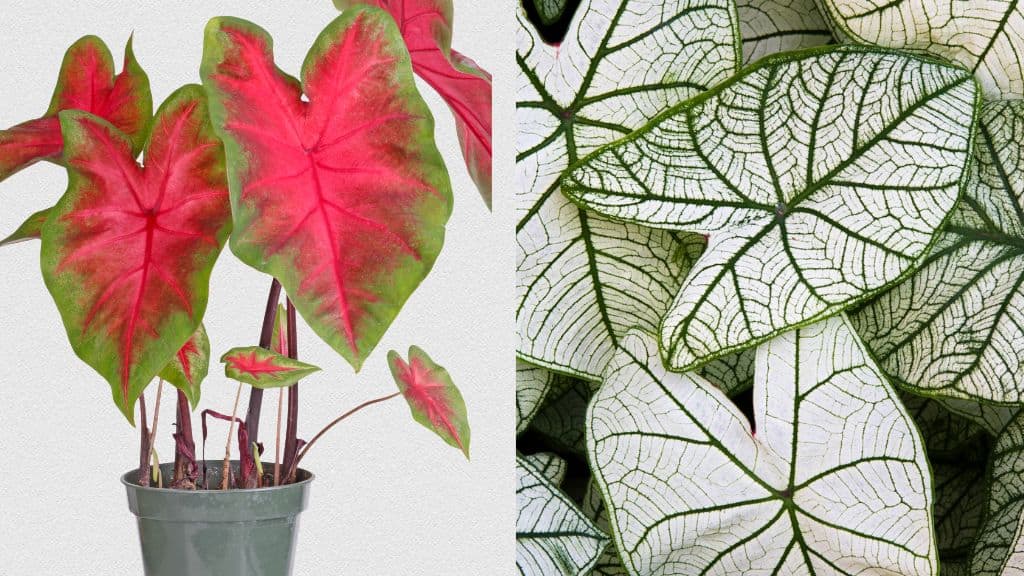
Last but not least, we have Caladium. These Elephant Ear plants are known for their colorful, heart-shaped leaves. They’re smaller than the other types, making them perfect for indoor growing.
Popular varieties include:
- Caladium Bicolor: Known for its pink and green leaves.
- Caladium Candidum: This variety has white leaves with green veins.
Caladiums prefer a bit more shade than the other types. They also need a well-draining soil mix and regular watering, but be careful not to overwater.
Remember, each type of Elephant Ear plant has its own unique needs. But with a bit of love and care, they can all thrive and become a standout feature in your space.
Other Noteworthy Elephant Ear Plant Types

While Colocasia, Alocasia, Xanthosoma, and Caladium are the main types of Elephant Ear plants, there are other varieties that deserve a mention. These plants may not be as common, but they’re just as stunning and can add a unique touch to your garden or indoor space.
Here are a few noteworthy types:
- Remusatia Vivipara: This rare variety is known for its small, arrow-shaped leaves. It’s a great choice if you’re looking for something a bit different.
- Anthurium Superbum: Also known as “Bird’s Nest Anthurium,” this plant has large, dark green leaves that grow in a rosette pattern, giving it the appearance of a bird’s nest.
- Philodendron Pedatum: This variety has deeply lobed, light green leaves that give it a unique look. It’s a climbing variety, so it’s perfect for adding some vertical interest to your space.
- Bergenia: While not a true Elephant Ear plant, Bergenia has large, round leaves that resemble elephant ears. It’s a hardy plant that can tolerate colder temperatures than most Elephant Ear plants.
Remember, variety is the spice of life, and the same goes for your garden or indoor plant collection. Don’t be afraid to experiment with different types of Elephant Ear plants. You might just find a new favorite!
Elephant Ear Plant Care Guide
Indoor Care for Elephant Ear Plants
Caring for Elephant Ear plants indoors can be a rewarding experience. Here are some tips to help your indoor Elephant Ears thrive:
- Light: Place your plant near a window that gets bright, indirect sunlight. Too much direct sun can cause leaf burn.
- Water: Keep the soil consistently moist but not waterlogged. Overwatering can lead to root rot.
- Humidity: These tropical plants love humidity. Consider using a pebble tray or a humidifier to increase humidity levels.
Common issues include yellowing leaves (often due to overwatering) and leaf burn (from too much direct sunlight). If you notice these issues, adjust your care routine accordingly.
Outdoor Care for Elephant Ear Plants
Elephant Ear plants can make a big impact in outdoor gardens. Here’s how to keep them happy:
- Location: Plant your Elephant Ears in a spot that gets partial to full shade. They can tolerate some sun, but too much can cause leaf burn.
- Soil: They prefer rich, well-draining soil. Consider adding compost or peat moss to improve soil quality.
- Water: Keep the soil consistently moist. In hot weather, you may need to water more frequently.
Common issues for outdoor plants include leaf spots (often due to fungal infections) and wilting (from too much sun or not enough water). If you notice these problems, adjust your care routine and consider using a fungicide if necessary.
Remember, every plant is unique and may have different care needs. Pay attention to your plant’s signals and adjust your care routine as needed.
Frequently Asked Questions
Are there different types of elephant ear plants?
Yes, there are several types of Elephant Ear plants. The main types are Colocasia, Alocasia, Xanthosoma, and Caladium. Each type has its own unique features and care needs.
Are there different sizes of elephant ear plants?
Absolutely! Elephant Ear plants come in a range of sizes, from smaller indoor varieties to large outdoor types that can grow up to 10 feet tall.
Are elephant ears a type of caladium?
Caladium is a type of Elephant Ear plant. They’re known for their colorful, heart-shaped leaves and are smaller than other types, making them perfect for indoor growing.
Is an elephant ear a type of philodendron?
No, Elephant Ear plants and Philodendrons are different types of plants. However, some Philodendrons, like the Philodendron Pedatum, have large, lobed leaves that resemble elephant ears.
Is an elephant ear a Monstera?
No, Elephant Ear plants and Monstera are different types of plants. They both have large, dramatic leaves, but they belong to different plant families.
Is elephant ear plant an alocasia?
Alocasia is a type of Elephant Ear plant. Alocasia plants are known for their large, upward-facing leaves.
Can elephant ears take full sun?
Elephant Ear plants can tolerate some sun, but they prefer bright, indirect light. Too much direct sun can cause leaf burn.
Do elephant ears like full sun or shade?
Elephant Ear plants prefer bright, indirect sunlight. They can tolerate some direct sun, but too much can cause leaf burn. They also do well in partial shade.
Can elephant ears grow in water without soil?
Yes, some types of Elephant Ear plants can grow in water gardens. However, they still need nutrients to thrive, so it’s important to use a liquid fertilizer.
Do elephant ears like a lot of water?
Yes, Elephant Ear plants prefer consistently moist soil. However, it’s important to avoid overwatering, as this can lead to root rot.
How do elephant ears grow best?
Elephant Ear plants grow best in warm, humid conditions with bright, indirect sunlight. They prefer consistently moist, well-draining soil.
What is the best fertilizer for elephant ears?
Elephant Ear plants benefit from a balanced, slow-release fertilizer. Look for a fertilizer with an NPK ratio of 20-20-20.
How do you make elephant ears grow faster?
To encourage faster growth, provide your Elephant Ear plants with optimal growing conditions. This includes bright, indirect sunlight, consistently moist soil, and regular feedings with a balanced fertilizer.
How do you make elephant ears grow more leaves?
Providing optimal care can encourage your Elephant Ear plant to produce more leaves. This includes providing enough light, keeping the soil moist, and feeding regularly with a balanced fertilizer.
Should I water my elephant ears everyday?
Elephant Ear plants prefer consistently moist soil, but the frequency of watering will depend on the plant’s environment. In hot, dry conditions, you may need to water more frequently. Always check the soil moisture levels before watering. Overwatering can lead to root rot.
Conclusion
And there you have it, folks! A deep dive into the world of Elephant Ear plant types. From the colossal Colocasia to the alluring Alocasia, the exotic Xanthosoma, and the captivating Caladium, we’ve explored the main types of these tropical beauties. We’ve also touched on their care needs, both indoors and outdoors, and answered some of your burning questions.
Remember, whether you’re a seasoned gardener or a green-thumbed newbie, Elephant Ear plants are a joy to grow. They’re a statement piece, a conversation starter, and a touch of the tropics, all rolled into one. So why not add one (or more!) to your plant collection?
As always, happy planting, and may your Elephant Ears grow large and lush!

