
Is there anything more frustrating than taking care of a plant and then seeing it die? It’s like all that time and effort was for nothing.
Well, don’t worry, because in this blog post I’m going to teach you how to take care of Hoya Obovata, also known as the wax plant. So keep reading!
About the Hoya Obovata
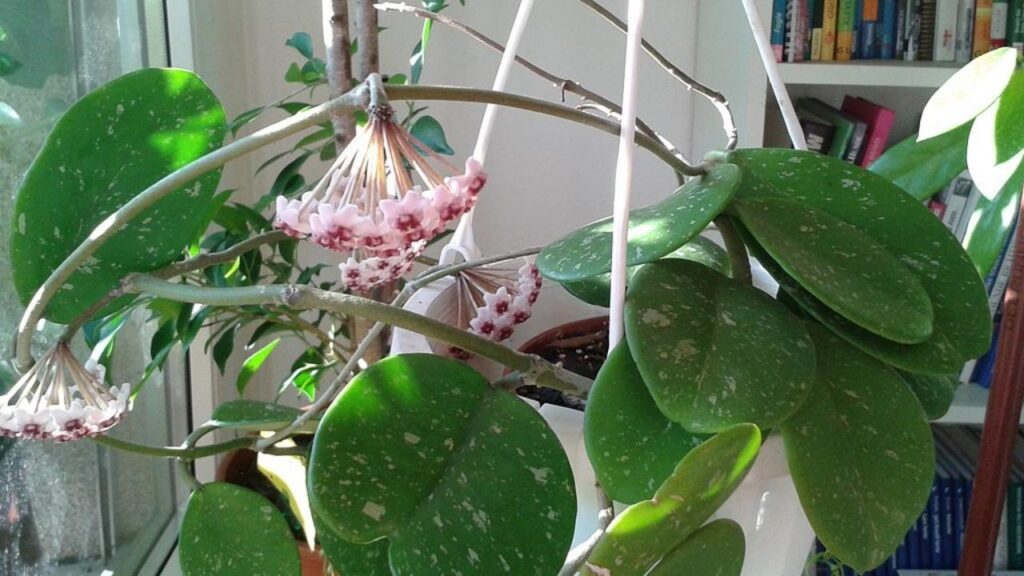
The Hoya obovata is a semi-succulent plant that is drought-tolerant and easy to grow. It is an ideal plant to grow in hanging planters. They may also climb trellis or moss poles with impressive balls of sweet-smelling tiny star-like blooms. They are also called wax plants because of the thick dark green leaves with silvery splashes.
These fast-growing plants are unique and can grow up to 12-20 feet for a long time with proper care. It can grow indoors and outdoors, too, in dappled light or in any area with bright indirect light.
Origin
The Hoya obovata comes from the tropical forests of Indonesia, where they grow on trees, like orchids, getting their food and moisture directly from the air. They can be grown anywhere if the right conditions are met.
Characteristics
The Hoya obovata and other hoyas are very popular trailing plants with thick waxy leaves. These are epiphytic plants that can get moisture and nutrients from the air. These are drought tolerant plants with thick leaves that can hold water like succulents.
The Hoya obovata has silver “splash” patterns in its large deep green oval leaves which make it unique from other hoyas. It is harder to find than the common Hoya carnosa but fast-growing with light pink and white flowers that are fragrant and very eye-catching.

Growing Instructions
The Hoya obovata needs little care and maintenance. Bright indirect light, regular watering when soil is dry, fertilizer during the growing season, and a nice well-draining soil mix in a pot of choice with enough drainage holes are needed to grow these vines with waxy leaves.
Light
The Hoya obovata needs full sun-bright, indirect light. They receive bright dappled light up among the trees in their natural environment.
If grown outdoors, keep away from direct sun to avoid sunburn, which can damage the leaves and make the plant ugly.
If grown indoors, place it in a bright spot but away from direct sun like a sunny south-facing window.
Water
The Hoya obovata can die from overwatering. It should dry out thoroughly between watering, meaning water only when the soil has dried out. Water the plant regularly during summer and spring or its growing season, and water less during the cold dormancy.
To determine if it’s time to water, stick your finger in the soil. If the soil is dry to the third inch, hold the pot over the sink and let the water come out of the drainage holes. Then let rest in a saucer.
Soil
The Hoya obovata needs a well-draining soil mix. Orchid bark mixed with peat and perlite is a good mix to provide enough drainage and aeration for the plant. Potting soil with pumice, compost, and orchid bark may also be used. Make sure that the pot has enough drainage holes, as well.
Fertilizer
A fertilizer rich in nitrogen is ideal for the Hoya obovata when it’s about to bloom, then use a fertilizer rich in phosphorus to encourage more blooms.
Apply fertilizer every couple of weeks during spring and summer when the plant is growing.
Flowering
The Hoya obovata has pink or white star-like flowers that grow into a ball. The plant will flower when mature at two or three years of age. The flowers are very fragrant also. Be careful not to remove the peduncles where the flowers grow so that they will flower again next growing season.
Temperature and Humidity
The Hoya obovata appreciates humidity and regular misting. They thrive well indoors at regular room temperature and humidity levels.
You may also place them in areas around the house which are rich in humidity, like the kitchen, bathroom, and laundry room, as long as they receive bright indirect light.
Avoid placing the Hoya obovata in areas exposed to extreme temperatures, such as near fans, heat vents, and drafty windows.
Potting and Repotting
The Hoya obovata can tolerate being rootbound so that it doesn’t require regular repotting. Repot it every two or three years. When potting and repotting, use pots with ample drainage holes to avoid waterlog and damage to your Hoya obovata.
You may use terracotta pots which are good to offset the weight of the plant as it grows. Any pot could be used as long as there are enough drainage holes. You may use plastic or ceramic pots with good drainage holes.

How to Propagate
The Hoya obovata can easily be propagated through stem cuttings. Clip a cutting with five leaves or up, remove the lower 2 to 3 leaves to expose the nodes, and root these in water or directly in the soil.
When using water, submerge the nodes only with the leaves above the water. When rooting in the soil, keep the soil moist to encourage root growth until the plant is established.

Common Pests and Plant Diseases
Sap-sucking pests such as aphids, mealybugs, scales, and spider mites can attack the Hoya obovata. Sooty mold can also grow on the leaves.
To control these pests, use a quality pesticide. Wipe the leaves regularly to avoid the growth of sooty molds.
Common Problems
Other problems of the Hoya obovata aside from pests and sooty molds are sunburned leaves and yellow leaves caused by overwatering. Wilting or wrinkled leaves may indicate that it’s time to repot in a bigger pot.
Slow growth may also be a problem caused by a lack of light. Try moving it to a brighter area but away from direct sun.

Conclusion
Keeping a Hoya obovata is relatively easy and is recommended for starters. Just keep the plant in a bright area but not directly exposed to the sun. Water only when soil is dry and mist to help grow healthy waxy leaves. Apply fertilizer during the growing season, and wipe leaves now and then to avoid sooty molds and to make leaves shiny and presentable.
Plant in hanging planters or let them climb trellis or moss poles. Propagate through stem cuttings so you can give them to your friends to grow as gifts.
Happy planting!

