
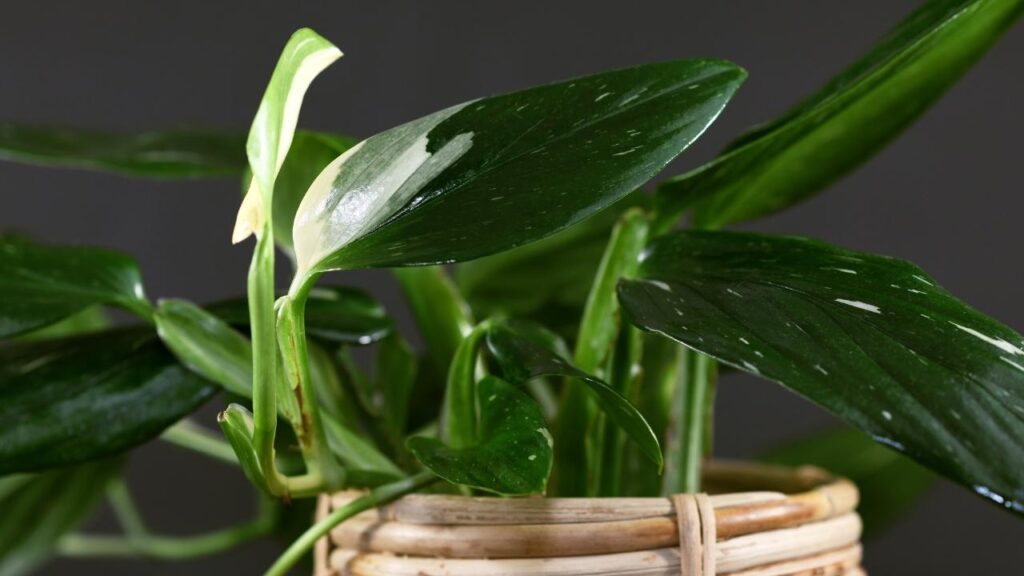
If you’re a gardener, then you’ve probably heard of the Monstera Standleyana. It’s a beautiful plant that’s native to Central America, and it’s known for its large leaves and tropical look.
If you’re thinking about adding one of these plants to your garden, then read on for care and growing tips.
About the Monstera Standleyana
The Monstera Standleyana is a climbing plant with oval leaves from the family of Araceae. The variegated Monstera Standleyana has cream or white-speckled leaves.
It is similar in appearance to the philodendron, but it belongs to a different genus. Other names given to this plant are Albo variegate, Five holes plant, Philodendron standleyana and Philodendron cobra.
Origin
The Monstera standleyana comes from Costa Rica, Nicaragua, Honduras, and Panama in South America. It is a tropical aroid. Being a tropical plant, it loves warm, bright indirect light.
Characteristics
The Monstera standleyana is a beautiful climbing plant with cream or white-speckled leaves. Each leaf looks unique, which adds to the charm of the plant. This epiphyte climbs trees in the wild, taking nutrients directly from the air.

Growing Instructions
The Monstera standleyana can grow up to 20 feet in the wild. When cultivated as a houseplant, it may reach 5 feet tall. It can quickly be grown indoors with the right lighting, watering and soil mix.
Light
The Monstera standleyana loves full sun-bright, indirect light. You may place it in a window facing north or east to absorb morning light. You may put it in a window with light curtains to screen the sunlight.
Water
The Monstera standleyana needs well-draining soil to avoid overwatering, which may damage the plant. A once-a-week watering schedule may be enough. When it’s time to water, check that the top two (2) inches of soil is dry by sticking your finger. Hold it over the sink or drench it until water flows out of the potholes.
If it dries out easily, you may want to water more often. Lack of water may stunt your plant’s growth, but overwatering it will cause root rot.
Soil
A well-draining soil composed of one part potting mix, one part perlite and one part orchid bark would make your Monstera standleyana happy. Do not use too sandy soil, compacted or dry. Put the plant in a pot with enough drainage holes to provide good aeration also. The soil pH must be 5 to 7.
Fertilizer
Apply a quality fertilizer to your Monstera standleyana, especially during the growing season in summer and spring, to encourage growth. Fertilize three times a year, except in winter. Do not use cheap fertilizer which has too much salt. This can kill the plant.
Temperature and Humidity
The Monstera standleyana loves warm temperatures to grow, around 70 to 85 degrees Fahrenheit. It will not do well below 55 degrees Fahrenheit, so keep it warm indoors during winter.
The Monstera standleyana needs 55 to 80% humidity to grow verdant leaves. You can mist it to keep it moist or put a tray of pebbles with water under it to increase humidity but make sure that the water does not get absorbed by the bottom of the pot and cause overwatering.
You may also use a humidifier to enhance humidity. But make sure the humidifier does not use cool air and do not put it too close to the plant.
Potting and Repotting
It’s time to repot when the roots come out of the pot drainage holes. Choose a pot about 2 inches larger than the previous pot. Put some well-draining soil composed of potting soil, orchid bark, and perlite to ensure good circulation of air also.

How to Propagate
It is best to propagate the Monstera standleyana in Spring. You may propagate through stem cuttings. First, snip a stem having at least three leaves, 5 to 7 inches long.
You may root in water or plant directly in soil with a similar soil mix as the mother plant. When rooting in water, submerge the nodes and let leaves stay above water. Transfer to the soil mix when roots are 1 to 2 inches long.

Common Pests and Plant Diseases
Pests such as aphids, mealybugs, scales, fungus gnats, and spider mites can attack the Monstera standleyana. Control these by using pesticides and fungicides. You may blast the pests with water and remove topsoil to get rid of their eggs. Scrape them if necessary and remove infected leaves.
You may use the following also: 70% rubbing alcohol, diatomaceous earth, essential oils, insecticide soap, neem oil, chili oil, and three tablespoons of mild dish soap with a gallon of water.
To avoid these pests, place the plant in an area with good air circulation and away from infested plants. Repot if necessary.
Root rot and rust spot due to overwatering may also become a problem. A regular watering schedule when the top two (2) inches of dry soil will prevent overwatering. In root rot, you may cut the stem and put it in water to propagate.
Common Problems
Yellowing leaves or browning of leaves of the Monstera standleyana are usually a sign of overwatering.
Check the top two (2) inches of the soil if this is wet for at least one day. You may have overwatered the plant. If so, repot in better well-draining soil and water when the top two (2) inches of the soil are dry.
Wilting leaves may be due to too little water. Check every day when the top two (2) inches of the soil are dry, then water accordingly. Do not let the plant dry out for too long, especially in hot and dry areas where you may need to water it every other day.
Brown spots with yellow circles are a fungus sign. Remove all the leaves affected by the fungus, and if necessary, apply fungicide and repot.
Sunburned leaves may be due to exposure to harsh sunlight. Keep in a bright area but with indirect light. You may move it around the house where there is bright indirect light.
All Monstera varieties are toxic to animals and children. If ingested, call for medical help.

Conclusion
The Monstera standleyana will grow well when you make sure it grows in well-draining soil and water when the top two (2) inches of the soil is dry.
Remember to place it in a warm and bright space with enough humidity to make the Monstera standleyana happy.
Happy planting!

