
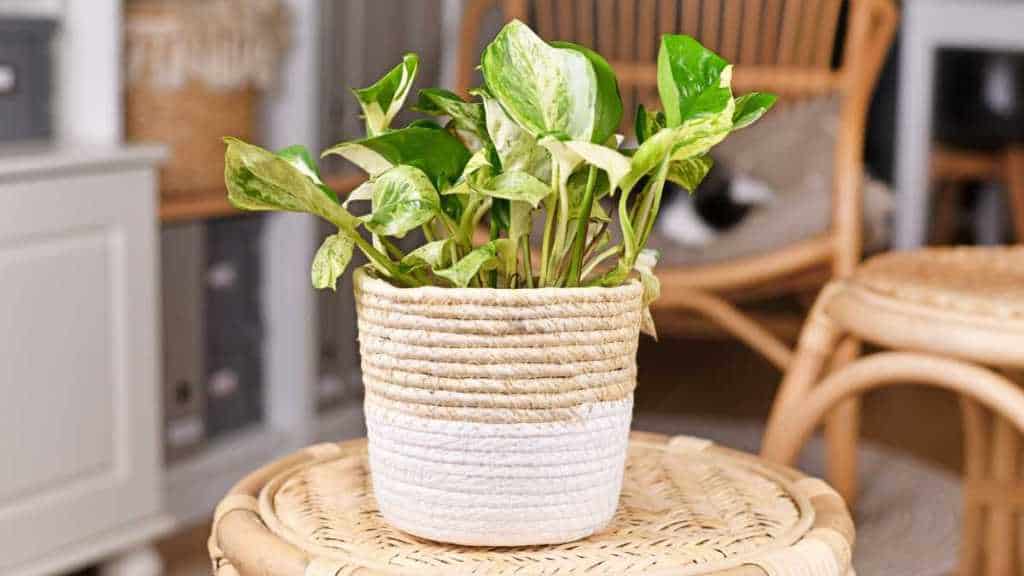
The NJoy Pothos is a great choice if you’re starting with houseplants. It’s easy to care for and doesn’t need much sunlight to grow. You can train it as either climbing vines or ailing plants.
NJoy Pothos Is Best For Beginners
If you’d like to start gardening, this is the plant for you! NJoy Pothos is an excellent houseplant for beginners and experienced gardeners alike. It’s hardy, easy to care for and maintain, and can be grown in any environment.
Plant Type: Houseplant, Perennial
Pothos, an indoor plant and perennial, belongs to the Araceae family. Pothos is a vine that can grow up to two meters long and has a trailing habit. Pothos plants have stems that are smooth on one side and slightly hairy on the other. But it does not have roots at the nodes as other vines do.
The leaves of Pothos are simple, heart-shaped, with scalloped edges. They are also glossy green in color. Depending on the cultivar you’re buying, they may also be variegated or white-striped.
It does best indoors as it does not tolerate cold weather well. Some varieties can tolerate temperatures down to 60s F if kept indoors with plenty of light.
Planting
Pothos are easy to grow, but they need well-drained soil and enough water. They cannot tolerate standing water and will rot if you overwater them. The best way to plant your Pothos is a little off-center. It allows the plant to have support for its weight as it grows.

Watering
The water needs of NJoy Pothos are minimal; once every two weeks should do it (it’s important not to overwater them!). If you want your plant’s leaves to look glossy and green, it may need more frequent watering.

Fertilization
Fertilizing your potted plants with organic fertilizer will help them grow faster. They will also look healthier than non-fertilized plants. Fertilize in spring or early summer before new growth sprouts from the soil. Be sure to put some fertilizer in the soil before planting; one tablespoon per gallon of water should do it.
Use an organic fertilizer like fish emulsion or liquid seaweed–not plain fertilizer! In the first year after planting, ensure that you fertilize with a weak solution (1/4 teaspoon per gallon). Do this every two weeks from spring until fall.
Reduce this by half after six months unless growth seems slow during cold weather. Then, repeat monthly until late spring, when new growth begins again in earnest.

Pruning
Pruning helps keep plants healthy by removing dead sections or branches. These dead sections and branches might harbor diseases or pests like spider mites. Also, it keeps them looking good by maintaining their shape!
Cutting off one branch at a time is usually enough unless they’re overgrown. Then consider doing something drastic, like cutting away half of what’s left behind. Doing this will ensure that only a few branches are hanging from above. Otherwise, those things could get caught up with each other when they try their hardest.
Mature Size
Varies by variety, but most are trailing plants with vines that can grow up to 10 ft. long. Heart-shaped leaves range in size from 2–6 in.
Pot Size
Select a wide and shallow pot instead of a tall and narrow one. Pothos prefers high humidity and should be grown in porous pots. So the roots stay wet for a short time and rot or become waterlogged.
Sun Exposure: Bright Indirect Light
The ideal location for your Pothos is a bright, indirect light. Avoid direct sunlight, as this can burn its leaves. Place it near a window with a good amount of sunlight if you don’t have a bright spot in your house. But make sure not to overexpose it, so it becomes too hot and dry.

Soil Type: Well-drained Potting Soil
When growing a pothos indoors, the soil you use will be very important. Pothos is not a picky plant, but you must use the right soil to drain well. Too heavy or compacted soil can kill your plant because of root rot. Soil should also be loose and airy so that good drainage can happen. Potting soil is a good choice for Pothos. Potting soils have a light texture and the ability to drain well.
Soil pH: 5.5–7.0
Soil pH measures the concentration of hydrogen ions in the soil. The scale has a 0-14 point system, with seven being neutral. Acidic is anything below 7, while anything above 7 is alkaline.
Soil pH affects the availability of nutrients to plants. Most plants grow best in slightly acidic soils with a pH between 5 and 6.5. If your Pothos’s leaves turn yellow or brownish red, they may lack nutrients due to improper soil pH.
Bloom Time
If you’re lucky, your Pothos will bloom. But this is rare in indoor cultivation, so don’t get your hopes up. The plant will produce many stems (runners) from the main stem that reach out (“stolen” means “branch”). These branches will also produce roots at their nodes, where they emerge from the soil.
Flower Color
Photos plant has thick, glossy leaves and unusual leaf shapes. It will grow well in low light conditions, such as indoors or near an east-facing window. Pothos does not need much water. It’s a good choice for people who don’t have time to water plants frequently.
The plant also makes an excellent addition to a terrarium. It can thrive in hot and cold temperatures, making it ideal for people in all four seasons (or climates).
Also, to have beautiful foliage, Pothos has occasionally produced flowers. In the wild, these are white, but they may be other colors indoors, including yellow or pink; red ones are common too!
Hardiness Zones: 10–12 (USDA)
You can grow NJoy Pothos in USDA zones 10–12. It means that in warmer areas, such as southern Florida and Texas, you can grow it outdoors year-round. It can be grown outside in colder climates but only during the warmest months. If you live in a climate with freezing temperatures, bring your potted plants inside at night or when there is a chance of frost.
Conclusion
The NJoy Pothos is a great plant for beginning gardeners because it’s easy to care for and maintain. The Pothos can be grown indoors or outdoors but prefers bright, indirect light. It’s also very tolerant of different soil types, so feel free to experiment with this plant in your home. If you want an easy-to-grow houseplant that will brighten up any room in your house, give the NJoy Pothos a try!

