
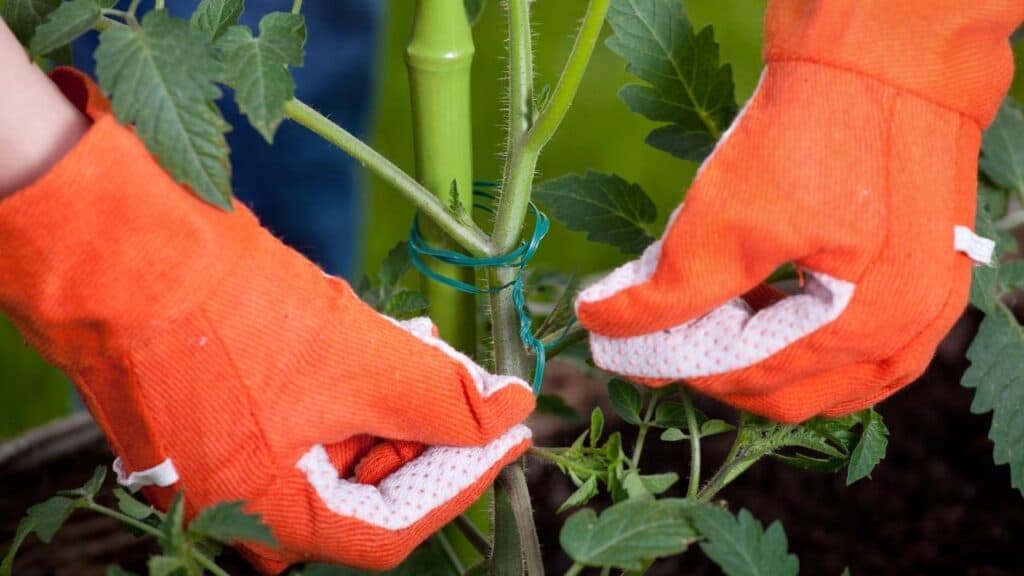
Staking tomatoes can seem like an adventure even for experienced gardeners. Resources can help you learn the ropes. Here’s everything you need to know about staking and supporting your tomatoes!
Determinate Vs. Indeterminate Tomatoes
Indeterminate tomatoes are viney and high-yielding. They need more space but are easier to stake than determinate tomatoes. Determinate varieties are bushier and produce fruit at once. They’re easier to stake but need less space because the vines don’t grow.
You can grow a hybrid tomato plant that combines determinate and indeterminate varieties. These hybrids are more compact than determinate tomatoes. But they still produce all their fruit at once.
Why Support your Tomatoes?
- The first reason tomatoes need support is because they grow fast.
- The second reason is that they don’t like to stay on the ground.
- Third, tomatoes can get diseases if lying on the ground and getting wet.
- And finally, tomato plants also need support to get as much sun as possible.
Tying Up Tomatoes To Stake
To stake your tomato plants, you’ll need a piece of twine or wire and something to wrap around it. It can be anything from a strip of cloth to old stockings. You’ll also want to use something that won’t harm the plant—wooden stakes are great for this. If you don’t have any stakes, try using branches that have fallen from trees in your neighborhood (make sure they’re not diseased!).
Tie the twine loosely around the tomato stem’s base so it can expand as it grows. Avoid tying it too tight. It can damage the stalk and stunt its growth! Secure another piece of cloth around these ties. It prevents them from rubbing against each other as they expand.
What Tomato Stakes Should I Use?
There are several tomato stakes to choose from, but you’ll want to ensure they meet your needs. Read on to learn more about them!
3′ Tall Stakes
3′ tall stakes are the perfect height for supporting tomatoes. You can also find these 3’ Tall Stakes at garden shops or hardware. The stakes should be at least 6″ wide and can be made from wood, bamboo, metal (such as rebar), or plastic. Use a wire that supports the vines if your tomatoes are growing on a trellis with horizontal wires. You can also use wires that twist ties to hold each stake.
Bamboo
Bamboo is a good choice for tomatoes. Bamboo stakes are strong and durable, holding up to the efforts of a heavy tomato plant. You can buy bamboo in bundles with various lengths and diameters. That makes them easy for novice gardeners to use. They’re also easy to find at garden stores or online.
Bamboo stakes are inexpensive, too! You’ll get dozens of stakes for just a few dollars. Free bamboo should also be available if you have older bamboo plants around your yard!
Y-shaped Stakes
Y-shaped stakes are an easy way to support your tomatoes. They can be made of anything sturdy and long enough to reach the ground. You can use bamboo or wooden dowels, pieces of plywood, thick branches, or even metal pipes. The best option is to find something with a little weight, so it doesn’t blow away in strong winds.
The great thing about these stakes is that there’s no need for special tools. You can make them using whatever materials you have around the house! Cut wood into two halves and connect them at one end using wire or twine. Then, attach this Y-shaped structure onto each tomato plant using zip ties. Doing this will help it remain upright throughout its growth cycle. It will also continue supporting those tasty fruits all summer!
6′ Pea Stakes
Pea stakes are easy to find and cheap. These are also powerful to hold your tomato plants. You can also use them for other plants. Use them as support stakes for plants in your garden (like cucumbers and peppers). If you don’t need them for tomatoes, you can cut them down into smaller lengths.
You can cut pea stakes and shape them into a specific size and shape you need. The plastic is malleable enough that it won’t break when bent. So if you want a shorter stake than 6′, use what’s left over from cutting pieces down that size!
Individual T-stakes
T-stakes are among the most common tomato stakes. You can use them for other vegetables, flowers, and plants. They’re made from metal or plastic and have a T-shaped crossbar inserted into the ground. Digging it in with your shoe will help hold it more. The crossbar is then secured to the stake at a 90-degree angle with an L-shaped piece of metal called an “eye bolt.” It allows you to attach strings or twine between each stake—these strings or twine act as a support system for your tomatoes.
Tomato Cages
Metal tomato cages
These are generally made of metal and available at any garden store. They usually come in two sizes: large and small.
Plastic tomato cages
These are also available at most garden stores. Ensure you take care of them, so they last as long as possible! You can reuse plastic tomato cages yearly if you’re careful with them.
Plastic Trellis Netting
Polypropylene is typically made from polyethylene or polypropylene. You can use this material for tomatoes, beans, cucumbers, and other plants. For a more lightweight option, try a plastic trellis.
Should You Cage, Trellis, Or Stake Tomatoes?
Tomatoes grown in cages, trellis netting, or other structures don’t have enough room to grow large enough to produce a high yield. They also often don’t produce many fruits. Staking is the best option for tomatoes—the process of staking supports the plant while allowing air and water to circulate.
Cages are best for small plants that have been transplanted into them. They provide support but still allow airflow between rows of plants. It can be handy for younger plants or those with smaller root balls. But once you start getting into larger varieties, it’s time to move on from cages. Large varieties include beefsteak heirloom tomatoes and orange bell peppers.
Trellis netting can help keep vines off fences and walls when space is limited. But, this method doesn’t provide much support. You’ll need lots of space around each plant if you want them all growing vertically.
Conclusion
There’s no one right way to stake tomatoes. The “right” method will depend on your personal preference. Take the time to see each method’s offers to make an informed decision. But there’s no need to stick with whichever method you choose forever. Experiment and find what works best for you and your garden!

