
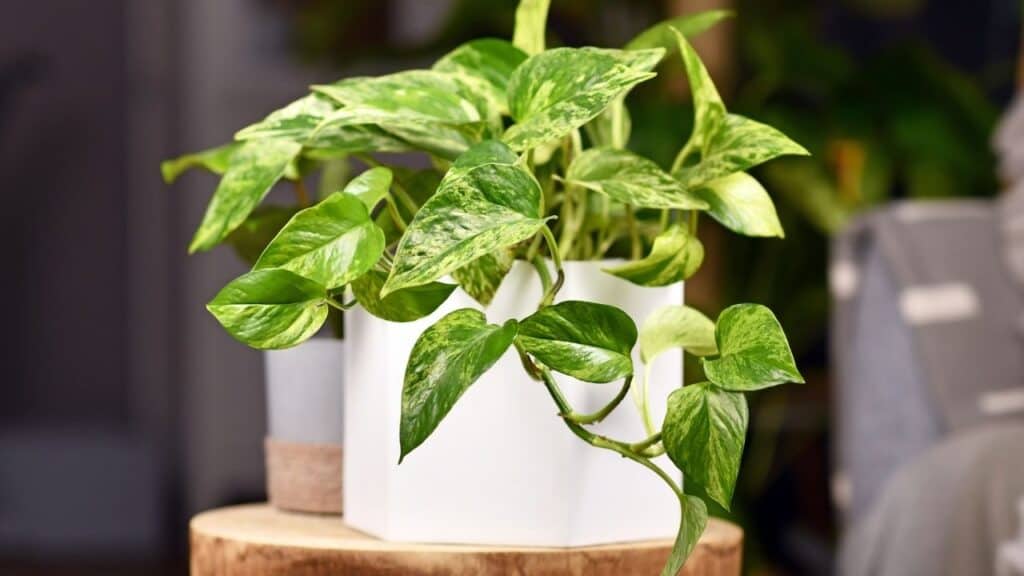
Marble Queen Pothos is one of the easiest plants to grow, and it’s beautiful too. It features marble-like leaves that will add aesthetic appeal to any room in your house or office.
Best of all, marble queen pothos can thrive in various settings, from low light to high light!
This article provides a complete guide on how marble queen pothos grow. You will also read about where you should place them and their optimal growth needs.
We’ll show you how to care for marble queen pothos at home so that it continues to look gorgeous year-round!
About Marble Queen Pothos
This plant is a popular houseplant because it is easy to care for. It grows best with bright indirect light but doesn’t require intense amounts of sun to thrive.
The marble queen pothos was initially grown as an ornamental plant. It is a type of houseplant that originated in Brazil, and now it’s grown all over the world.
The marble queen pothos has been around for about 400 years or so.

Marble Queen Pothos Plant Care (Growing Instructions)
Light
Marble Queen Pothos does best in bright but indirect light. They will still grow well if they receive less than this amount of light. However, they may not be as healthy or produce many flowers along the stem. An east-facing window would work great for these plants.
Watering
Marble Queen Pothos do not like being overwatered. So it is essential to use potting soil with excellent drainage and dry out quickly after watering. Use water sparingly during the first two months of growth, and then water as needed.
Temperature
Because these plants are natives of tropical climates, they prefer constant temperatures above the 50F zone.
The marble queen pothos is not frost-tolerant and will die if exposed to a freeze for more than 24 hours. They also don’t like draughts or drafts, as these can cause them to wilt quickly.
So during winter, marble queen pothos will need to be brought indoors. During summer, they can stay outdoors during the day and be brought in at night.
Humidity
Marble Queen Pothos requires high humidity. They are especially prone to root rot and other fungal diseases.
Place the marble queen in an area with indirect sunlight for at least a few hours. If possible, place a marble queen in a room with high humidity, such as a bathroom or kitchen.
The marble queen does not require much direct sunlight. It prefers to be placed in indirect light for about 12-12 hours per day to promote healthy growth.
Soil and Fertilizer
These plants need to be planted in well-draining soil and watered regularly. They are not heavy feeders. Fertilizing marble queen pothos is only recommended if the plant becomes very large or for indoor use. This is so as it may need occasional fertilizer to help maintain its health and color. It can be fertilized monthly with a general-purpose liquid houseplant fertilizer diluted by half (e.g., 20% solution).
Repotting
A marble queen pothos plant needs pruning at least once every six months, preferably twice per year. If you have an established marble queen pothos, it should be ready to repot after being planted between two and four weeks.
The best time to repot marble queen pothos plants is around October or November when they enter their dormancy. This may change depending on your location. So check your local weather reports before planting seeds.
Toxicity
When the marble queen pothos plant first starts showing signs of toxicity, it may be too late for your family members or pets. That’s why we recommend you try these tips on removing toxins from the plants before they start affecting humans:
- Remove any marble queen blooms (flowers).
- Ensure all water is collected in a clean container with no open flowers present nearby.
- Do not compost marble queen pots as this will also introduce toxins into the soil. This could affect human health when ingested through food grown thereon. They should either be discarded in an outdoor trash bin. Make sure animals cannot reach them. They can also be buried in the soil at least 18 inches below ground where the marble is protected from animal access.
Pruning and Maintenance
The marble queen can be pruned to keep it from getting large. However, this plant does not need regular trimming unless you shape the plant or change its size.
The marble queen is often grown in a hanging basket with vines that can drape over the edge. This type of planting needs frequent trimming because they will continue growing until they fill up their space.
If you would like your marble queen vine on the ground, plan for periodic trims to not grow into other plants. Be sure that when training marble queens as ground covers, any remaining branches are trimmed off at soil level each year.

How to Propagate the Marble Queen Pothos Plant in Potting Mix
- One of the easiest ways to propagate marble queen vines is by taking cuttings.
- Cut a vine off or use pruning shears to trim a healthy branch at least six inches long.
- Insert it into potting soil with good drainage in an area that gets indirect light for four hours each day.
- Keep this container moist but not wet, and watch your marble queen grow roots quickly!
- It may take up to two weeks for new plants from marble queens to show signs of life while they establish themselves as their plant. Be patient! The marble queen will be worth the wait when you see how strong its leaves are compared to other houseplants.
Propagate the Marble Queen Pothos Plant in Water
Take your scissors and clip off an inch from the stem with leaves on it for every cutting you want to make. Fill out a pot about halfway full with distilled water. Then place all the stems inside, so they are submerged under the water.
Give it one week to over a month for the marble queen pothos to sprout from a cutting. Then place them in soil or clay with some organic potting mix and give your plant an ample amount of light. This will help new marble queen pothos plants grow healthy roots faster!
Common Problems of Marble Queen Pothos Plant
Pests
Some common pests of marble queen pothos plants are mealybugs. These bugs cover the leaves and stems with a white powdery substance. Spider mites also attack marble queen pothos by sucking on its sap and creating webbing covering the plant’s leaves.
You can use insecticidal soap to clean marble queen pothos plants and leaves of pests.
Variegation Problems and Leggy Stalks
If the light is not bright enough, marble queen pothos will grow long, leggy stalks with few leaves.
If marble queen pothos are not watered regularly and only occasionally, they will wilt or droop in the middle of their growth cycle. They also might become stunted and produce fewer new shoots as a result.
Its variegation might not show, or marble queen pothos will be much lighter in color with large white patches.
If marble queen pothos are overwatered, the plant might develop root rot and turn brown at the base of its stalks.
A marble queen pothos’ leaves may dry out and become brittle if exposed to too much light.
A marble queen pothos might turn brown and limp if exposed to direct sunlight for too long without any shade or filtered light.
It’s essential to avoid moving marble queen pothos from one location to another. It is because the plant may not cope with new light levels, humidity, or temperature.

Conclusion
Marble Queen Pothos is a popular houseplant that is easy to care for. They do not need regular trimming unless you want to shape the plant or change its size. Marble queen pothos will be worth the wait when you see how strong their leaves are compared to other houseplants.

