
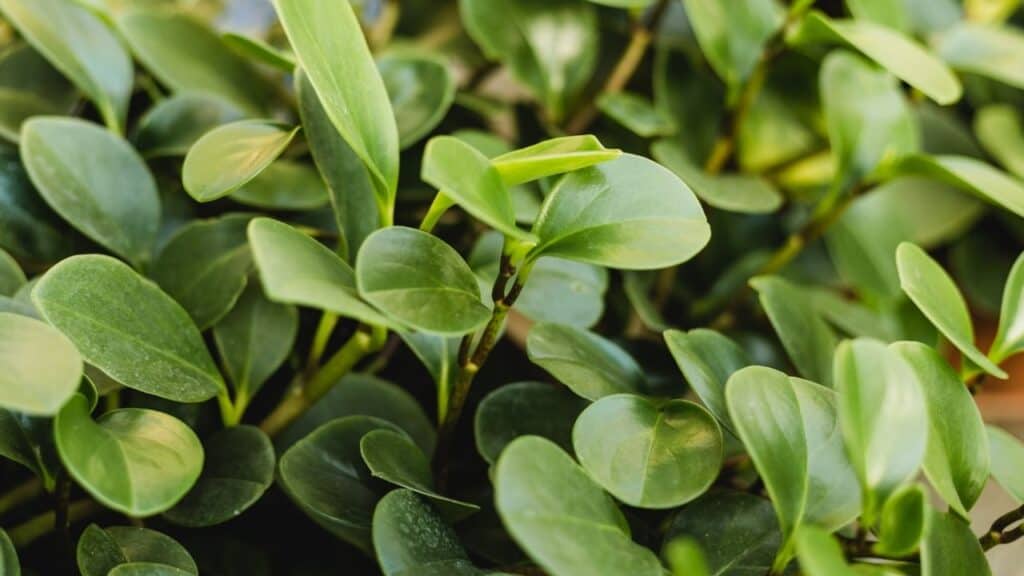
Are you looking for a child and pet-friendly plant? Peperomia Obtusfolia is a plant that I’d like to introduce.
Plants like this have dark green leaves, but they can also have white or yellow variegation that looks like marbling.
If you’re a newbie to houseplant gardening, this is a great place to start. If you have many different plants to look after both indoors and out, easy-to-care-for Peperomia obtusifolia is the way to go. They’re a lovely plant to look at, and they’re easy to reproduce.
If you are looking for a complete guide, Don’t sweat it. I’ll show you how to grow this fantastic plant using specific tips.
About Peperomia Obtusfolia
Peperomia obtusifolia is a succulent-like species of Peperomia that originated in the South American rainforests.
It’s also known as the Baby Rubber Plant; however, it’s not related to Hevea Brasiliensis, the principal natural rubber source.
Thick erect stems with glossy, large leaves distinguish the Peperomia Obtusifolia (or Peperomia Green).
The minimum plant size is 12′′ × 12′′, which is commonly grown in 4′′ or 6′′ grow pots. It gets a lot wider, in my experience. This plant can be used as a tabletop plant, as well as in dish gardens and terrariums.

Peperomia Obtusifolia Plant Care (Growing Instructions)
Light
Many other houseplants are similar to Peperomia obtusifolia.. One of mine grows 10 feet away from a wide bay window in my dining room, while the other grows beneath a skylight in my guest bathroom. It thrives in bright natural light of a moderate to medium intensity.
Water
Succulent-like Peperomia obtusifolias hold water in their thick fleshy leaves, stems, and roots. You don’t want to overwater this epiphytic plant since root rot will set in.
Before watering again, I let mine get almost completely dry. It’s once a week in the summer and every 2-3 weeks in the winter.
Temperature
65°F to 75°F is the average house temperature. If you’re at ease, the Baby Rubber Plant will be at ease as well.
If you’re comfy in your home, your houseplants will be as well. Just make sure your Peperomias isn’t near any drafts or air conditioning or heating ducts.
Humidity
In nature, Peperomias thrive in humid settings. Because their root systems are so tiny, they must rely on their leaves to collect water.
Because I live in a desert region, I always soak the foliage when I water the plant. I also leave mine out in the rain a few times a year to add moisture and scrub off the greenery.
If your home is dry and you think it needs it, spritz your Peperomia obtusifolia several times a week. Another method is to fill a saucer halfway with small rocks and water, then place the plant on top. The roots are kept from immersing in the water by the stone.
Soil
Rubber baby plants thrive in nutrient-dense, well-draining soil. You may easily make your general mixes by adding a fistful of bark or perlite to aid drainage. Because this plant has succulent-like characteristics, it will not like its roots to submerge in water.
To take your Peperomia obtusifolia care to the next level, add some compost as an organic supplement to the soil if you think it’s deficient in nutrients. Worm castings are also an excellent way to provide some more depth.
Humidity
Peperomias grow in humid environments in nature. Because their root systems are so tiny, they must collect water through their leaves.
I constantly wet the foliage when I water the plant because I reside in an arid desert environment. I also put mine out in the rain a couple of times a year to increase moisture and scrub the vegetation off.
If your home is dry and you think it needs it, spritz your Peperomia obtusifolia several times a week. Another method is to fill a saucer halfway with small rocks and water, then place the plant on top. The roots are kept from immersing in the water by the stone.
Feeding / Fertilizer
Rubber plants benefit from a light coating of vermicompost on most of the houseplants in the spring, followed by a soft layer of compost on top.
Gardeners feed Eleanor’s of-11 throughout the late spring, mid-summer, and late summer. Because of the long growing season, they enjoy the nutrients that this plant diet provides. By putting it in a spray bottle, you can use it as foliar feeding.
Repotting
In 2-4 days before the event, water the plants well. If it is dry, it will be stressed. You don’t want to repot it when it’s dripping wet.
If the root ball is a touch tight, gently massage the roots to loosen them up.
As a result, the roots will have more room to spread.
Make sure to clean off all of the dirt as well.
Half-fill the new pot with the mix. The rootball’s top will be level with or slightly below the pot’s top due to this.
Make the mixture moisture.
Keep in mind that the root ball of any plant isn’t too much below the soil’s surface (except for Cosmos, which you can plant quite deep).

How to Propagate the Peperomia Obtusifolia
First Propagation Method: Leaf Propagation
1. Snip a leaf with some stem attached
2. Plant it in new soil (water works too, but directly into the soil is a bit easier here),
3. Wrap the stem in plastic, but leave the whole leaf exposed.
4. Be patient and wait.
Second Propagation Method: Stem Cuttings
1. Cut just above a root node.
2. Submerge the cutting in water or damp soil. In both circumstances, employing a rooting hormone and covering any new plants in a bag to create a miniature greenhouse that can help trap in some humidity will help speed up the process.
Is it Safe For Pets?
Our pets enjoy knocking over, chewing on, or otherwise disrupting your houseplants, but don’t worry, “baby rubber plants” are pretty harmless.
According to the ASPCA’s Animal Poison Control, a tiny rubber plant is a perfect addition to a pet-friendly plant.

Conclusion
Toxicity can be exited in three ways. To begin, promote workplace collaboration. Second, get rid of those who are harmful. Finally, because it is a non-toxic plant, choose Peperomia Obtusfolia.
Aside from that, the non-toxic nature of the baby rubber plant is well-known. These plants will not endanger your children or pets. These do not also aggravate Asthma or allergic symptoms.
Peperomia Obtusfolia has the potential to wreak havoc on your surroundings.

