
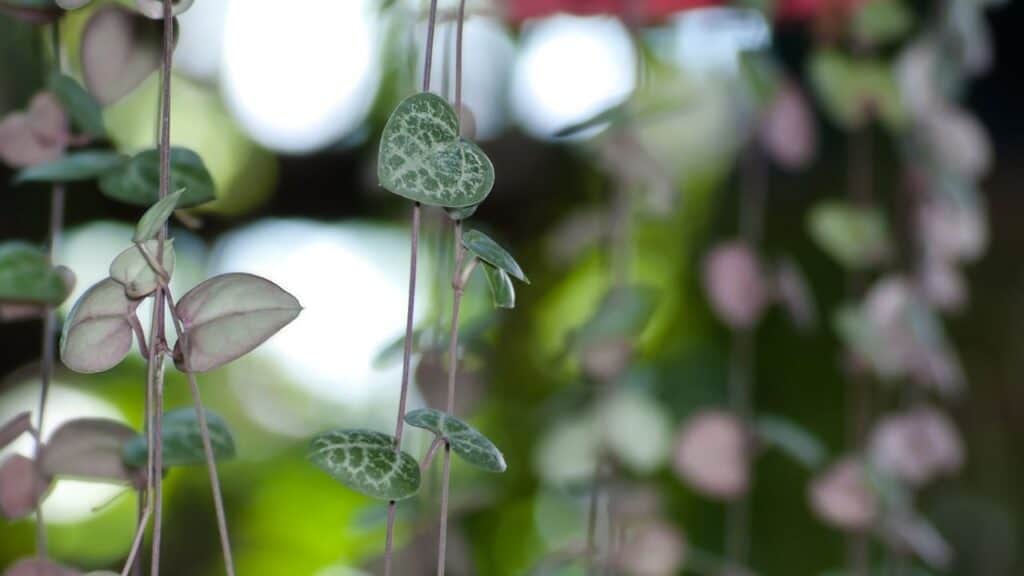
Do you have a thing for hanging plants? A string of hearts will undoubtedly steal your heart. A sweet and magnificent hanging plant native to South Africa, Swaziland, and Zimbabwe, the String of Hearts is a delicious and fantastic hanging plant.
You can hang these somewhere high, so you can see how beautiful it can be, especially when it begins to cascade out of the pot like a waterfall.
For the time being, I’ll guide you through the process of caring for these plants. You’ll also learn the fundamentals of reproducing these hardy houseplants.
About Strings of Hearts
The String of Hearts (Ceropegia woodii) is a trailing succulent-like plant. In its natural habitat, this plant’s delicate heart-shaped foliage and slender tendrils can reach up to 12′ long, earning it nicknames like Rosary Vine and Sweetheart Vine.
The fast-growing String of Hearts may soon create a one-of-a-kind beauty if given the correct atmosphere and care.

Strings of Hearts Plant Care (Growing Instructions)
Light
We adore our string of hearts since they generate the most color and leaves; thus, they need to be kept in bright light with some direct sun. Remind yourself not to leave it exposed all day.
Water
Water root rot is a specific problem for Chain of Hearts. It is preferable to avoid soaking things in the water for an extended period. Once a week, bath this plant. During the growing season, which is during the summer, the top 2-3 inches of soil should be completely dry.
Temperature
It is recommended to maintain an indoor temperature of 80-85 °F in the summer. In the winter, you must place it near the brightest window you can locate. It should have a temperature of at least 60 °F. If you’re going to plant it outside, make sure it’s in a sunny, shady spot.
Humidity
It’s preferable to keep them in a humid environment with a 40-50 percent humidity level. Purchase a tiny room humidifier if you wish to enhance humidity. Use a humidifier that emits a cool, fine mist and set it close enough to your plants to supply moisture without wetting the leaves. Second, spray the plants daily. Placing the jar on a tray loaded with stones can be the final step.
Soil
It’s pretty OK to use a succulent and cactus combination. If you have any coco coir on hand, add it to the mix for your String Of Hearts. A variety of half cymbidium orchid and half succulent mix would also work well. Ensure that the mixture drains thoroughly.
Fertilizer
To foster the growth of Strings of Heart, feed the soil. Although they don’t require many nutrients, you can use balanced liquid houseplant fertilizer any time. Worm castings can also be used to help promote growth.
Repotting
When they are actively growing, repotting your String of Hearts throughout the summer will lessen the risks.
Allow enough room for the heartstring to grow. Transplant a string of hearts to a bigger pot by 1-2 inches if it outgrows its current pot. Select a potting mix with good drainages, such as a cactus and succulent mix, or a houseplant mix with perlite and coco coir.

How to Propagate the Strings of Hearts
Water Propagation Method
All you need is a vase, scissors, and some water to get started. First, cut off the vine portions you want to root. Second, place them in the vase. Then, watch them grow roots.
Keep the vase in a warm, well-lit area so the root can grow as rapidly as possible.
Roots will grow after a few days of water propagation.
The length of time it takes for roots to grow is governed by light and temperature. Roots should emerge within very few days in optimal conditions.
Soil Propagation Method
First, cut the vines, remove the leaves from the side you want to plant, and finally, plant the vines in the earth. You must ensure that the nodes are covered in the soil for the root to grow during this phase. Place the vines in a sunny, aerated location with slightly wet soil to allow the roots to flourish.
To allow the root to grow, totally cover the nodes in the dirt while utilizing soil propagation.
Tuber Propagation Method
Obtaining the giant tuber possible is required for tuber propagation. A duplicate with the size of a fingernail might be an option. To develop roots, the tuber can be placed on the vine and pressed into the soil. Once the vine has taken root, you can cut it from the mother plant.
Using a different way, remove the tuber-bearing vine from the mother plant. Please place it in a soil-filled pot and cover the tube with the soil.

Conclusion
Love has always been linked to the heart. Adding a string of hearts to your collection can make your home feel warm and inviting.
A variegated string of hearts is notable for its heart-shaped leaves. The plant features a purple trunk with trailing green and white variegated leaves.
Every collector’s garden has these lovely and extremely unusual succulents.
I wish you the best of luck with your String of Hearts project!! This year may there be more blossoming hearts!

